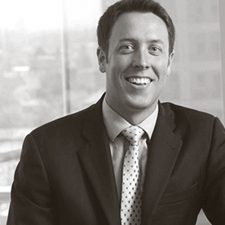

In the past 24 months, I have successfully tried seven cases to verdict or resolution, across subject matters that had almost nothing in common.
An elder abuse case. A breach of contract over unpaid fees. A three-month criminal case with a defendant facing life imprisonment. Four were jury trials, two were bench trials, and one was an arbitration. In all of these cases, I had the benefit of a deep bench at McManis Faulkner and, in particular, contributions by my partner Hilary Weddell, who tried three of the jury trials with me, and Jim McManis, my partner and mentor.
The short answer to the question of how we won seven trials in a row: Luck. I don’t mean that as false modesty. At trial, there are so many variables out of one’s control: the personality of the judge, the composition of the jury pool, the performance of opposing counsel – the list is endless. It would be foolish not to acknowledge the role of pure chance.
But, “chance favors the prepared mind.” My goal in this article is to point out that you can make your own luck. The prepared mind is the trial lawyer who can see the case for what it is, fashion a theme and message that will resonate, and then select a jury right for the case. There are, of course, many other considerations along the way, but the approach outlined below played a major role in my recent run of cases.
Start by Acknowledging What You Can’t Control
In each case I tried, there was a set of facts I could work with and law supporting a viable theory. In this day and age, for a case to make it to trial, there is probably something going for each side.
For example, in the elder abuse case, I had two elderly plaintiffs who had been diagnosed with dementia within weeks of the transaction at issue. The nephew who bought their home for a fraction of its value had discussed the terms in two telephone calls lasting a total of two minutes and ten seconds. When my client received a letter from the County Recorder and learned what happened, he fainted. I couldn’t create these facts. I simply recognized the path to winning was to go with the obvious—a lack of capacity to contract—and not get bogged down attacking the relationship with the nephew.
In the criminal case, my client was a pastor who faced accusations from nine individuals spanning multiple families. But when I dug into the facts, I found common motives, coordinated reporting, and allegations that didn’t hold up under scrutiny. Moreover, the law gave me a tool I wouldn’t have had in a civil case: character evidence generally admissible in criminal proceedings. We were able to paint a compelling picture of a man who had spent decades caring for needy families in his community.
In another case, we were defending a corporation against a plaintiff who had landed on a theory of fraud, after he dropped or lost all of his other claims. This gave us a narrow target. Our singular focus was to disprove intent. Again, we could not control the plaintiff’s case, but we could do everything possible to establish that the alleged corporate conspiracy would require multiple professionals working in concert to trick the plaintiff. The plaintiff’s case could not stand up to that kind of scrutiny.
My point is this: a trial lawyer’s first job is to see the case clearly. To recognize what you have. The strategy comes second.
Building the Theme: Working With The Facts You Have
If I had to identify one key to every win, it is thematic discipline. In each case we had a simple human truth that the jury or judge could carry into deliberation. When possible, the theme appeared in voir dire, surfaced again in opening, again through the examinations, and came back at closing. It doesn’t have to come off as pedantic. Comedians do this all the time in the form of “callbacks.”
The party with the more coherent, complete, and comprehensible narrative has a decisive advantage. In a real estate partnership case, the theme was trust. My client had invested $375,000 with people he had known for forty years—one of whom was a licensed real estate agent who was also my client’s close friend. When their development project appreciated to $5.4 million, they cut out my client. The case I wanted the jury thinking about: What kind of world do we live in if a friend can do that to another friend without consequence? “Trust” explained deficiencies in documenting the deal (why would you need to “paper” a friend?) and why my client waited 20 years to collect on the deal (his friend had made oral assurances over the years). “Trust” also helped to blunt the defendants’ assertion of the statute of limitations. It allowed us to recast the defense as: “you were a fool to trust us all this time.”
In the criminal case, the theme was accountability and motive. The prosecution opened by saying it was a case about “truth to power.” We agreed. But we reframed what the truth actually was, and who held the power. The police investigation was results-oriented: investigators canvassed the community to find additional accusers rather than test the allegations already in hand. When you looked closely, the power was with the prosecution, and the truth was our client’s innocence.
Themes don’t need to be clever. They need to be true, resonant, and deployed effectively. Personally, I pitch possible themes to friends, family–parents at my kids’ school–anyone who makes the mistake of asking what I’m up to or how I’m doing. I test them on my wife, a photographer. These are the kinds of people who end up on a jury. If the hook doesn’t work with a home crowd, it won’t land for strangers.
Voir Dire: Working With The People You Have
Voir dire is no different. You do not get to choose the jury pool. You work with the people you have.
Jury selection is really de-selection. There are too many jurors to be empaneled and too few challenges to draft a dream jury. During voir dire, I look for the people whose personalities would make it hard to hear the case fairly. I am also wary of “the eager beaver,” people whose dominant personalities might railroad deliberations.
The randomness of the jury panel is a gift. Properly handled, there is always someone who will express some form of bias or thinking that needs to be addressed at the outset. For example, someone will say they give written contracts more weight than oral contracts. But as a matter of law, oral contracts are just as valid as written contracts. (CACI 304.) This is not an intuitive concept, and it may be critical in an oral contract case. During voir dire, one can introduce this point of law before the jury is even selected.
A productive voir dire encourages pushback. Only in an open discussion can you get people to commit to put aside their preexisting positions. In defending cases, I ask the jury to look at my client. I ask the jury if they will promise to be fair to him–while they look at him in the courtroom. Criminal defendants are innocent until proven guilty in the eyes of the law. In a case in which I am defending someone, I make certain the jurors understand the burden the other side has to prove.
Lastly, you will not change the spots of a leopard. In the words of Maya Angelou, “when someone tells you who they are, believe them.” Peremptory challenges exist for a reason.
Conclusion
There is no formula for winning at trial, but there is a discipline: see the case for what it is, not what you wish it were; build a theme that is true before it is clever; and select a jury by listening rather than performing. None of that guarantees a result. But it does improve the odds by channeling the benefits of random chance and increasing the force of the facts you already have. Whether any of this helps you with your next trial, I wish you good luck!